

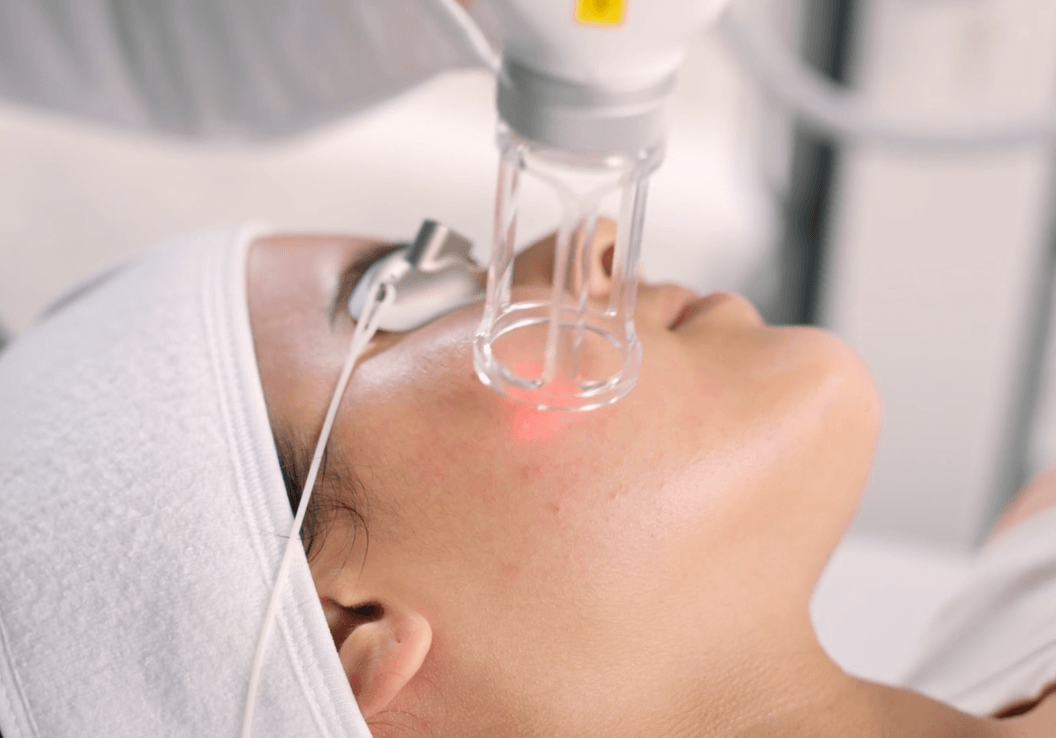
Microneedling has become a familiar option for people looking to improve concerns such as uneven skin texture, acne scars, visible pores, fine lines, and other signs of skin aging. But if you have started researching treatment options, you may have noticed that there is more than one type of microneedling.
Two of the most common terms are traditional microneedling and radiofrequency, or RF, microneedling.
That naturally raises the question: what is the difference between RF microneedling vs microneedling, and which approach may be more appropriate for your skin goals?
Traditional microneedling uses very fine needles to create controlled micro-injuries in the skin. Those tiny channels stimulate the body’s natural wound-healing response, which can encourage new collagen and elastin production.
RF microneedling uses the same basic concept but adds radiofrequency energy. The needles penetrate the skin and deliver controlled heat into targeted tissue beneath the surface. That combination of mechanical needling plus thermal energy is designed to stimulate collagen remodeling more deeply.
Neither treatment is automatically the right choice for every person. The better option depends on what you want to improve, the severity of your concerns, your medical history, your skin, expected downtime, and the treatment plan recommended by a qualified provider.
At The Skin Suite in Richmond, Kentucky, RF microneedling and 1540 Erbium Glass treatments are used to address concerns including fine lines, wrinkles, enlarged pores, rough texture, sagging skin, acne scars, surgical scars, sun damage, and hyperpigmentation.
This guide explains how RF microneedling differs from traditional microneedling and what you should consider before choosing between them.
What Is Traditional Microneedling?
Traditional microneedling is a minimally invasive skin treatment that uses a device containing very small sterile needles.
As the device passes over the treatment area, the needles create controlled microscopic punctures in the skin.
These micro-injuries trigger the body’s wound-healing response. As the skin repairs itself, collagen and elastin production can increase.
For this reason, microneedling is also known as collagen induction therapy.
The American Academy of Dermatology explains that microneedling is used for concerns including:
- Acne scars
- Surgical or injury-related scars
- Fine lines and wrinkles
- Uneven skin tone
- Uneven texture
- Large pores
- Dark spots
- Certain stretch marks
The key mechanism is mechanical stimulation. The needles themselves create the controlled injury that triggers skin remodeling.
What Is RF Microneedling?
RF microneedling combines microneedling with radiofrequency energy.
Like traditional microneedling, an RF treatment uses very small needles to penetrate the skin. The major difference is that radiofrequency energy is delivered through those needles into targeted tissue below the skin surface.
Cleveland Clinic explains that RF microneedling uses insulated needles to deliver radiofrequency energy into tissue beneath the skin, creating controlled warming that stimulates new collagen fibers and can improve skin quality and texture.
You can review Cleveland Clinic’s medical overview of radiofrequency microneedling for additional background.
At The Skin Suite, Secret RF microneedling is offered both on its own and as part of Secret Duo, which combines RF microneedling with a 1540 nm non-ablative fractional laser.
RF Microneedling vs Microneedling: The Main Difference
The simplest way to understand the difference is this:
Traditional microneedling = controlled needle injury
RF microneedling = controlled needle injury + radiofrequency heat
Both treatments stimulate a healing response. RF microneedling adds controlled thermal energy at selected depths.
That added heat is what differentiates RF microneedling from standard microneedling and helps explain why the two treatments may be chosen for somewhat different goals.
How Do the Treatments Compare?
Here is a practical overview.
| Comparison | Traditional Microneedling | RF Microneedling |
| Uses microneedles | Yes | Yes |
| Creates controlled micro-injuries | Yes | Yes |
| Uses radiofrequency energy | No | Yes |
| Stimulates collagen production | Yes | Yes |
| Can target skin texture | Yes | Yes |
| Can be used for acne scars | Yes | Yes |
| Can address visible pores | Yes | Yes |
| Can address fine lines | Yes | Yes |
| Adds controlled heat below the surface | No | Yes |
| Often selected for skin laxity/tightening concerns | Less directly | More commonly |
| Treatment settings customizable | Yes | Yes, including RF energy and depth |
| Downtime varies by treatment intensity | Yes | Yes |
The right choice depends on the concern rather than simply choosing the treatment with more technology.
How Does Traditional Microneedling Stimulate Collagen?
Traditional microneedling creates thousands of controlled microchannels.
The body interprets these tiny punctures as injuries and begins a repair process that can involve:
- Inflammatory signaling
- Fibroblast activity
- Collagen production
- Elastin production
- Tissue remodeling
Over time, this process may help make scars less visible and improve skin texture.
The American Academy of Dermatology describes microneedling as a treatment that stimulates collagen and elastin production, which is why it can be useful for acne scars and other textural concerns.
For more detailed medical information, review the AAD’s guide to microneedling for scars, uneven tone, and other skin concerns.
What Does Radiofrequency Add to Microneedling?
The radiofrequency component adds controlled thermal energy to the treatment.
Instead of relying solely on the physical needle punctures, RF microneedling delivers heat at selected depths beneath the skin surface.
That thermal effect can produce additional tissue remodeling.
Cleveland Clinic describes RF microneedling as producing a uniform warming effect within deeper tissue, which encourages new collagen fibers to develop.
This is one reason radiofrequency microneedling is frequently discussed in connection with:
- Skin texture
- Wrinkles
- Scars
- Skin laxity
- Collagen remodeling
The added energy does not mean every patient automatically needs RF. It means the treatment works through two mechanisms instead of one.
Which Is Better for Uneven Skin Texture?
Both traditional microneedling and RF microneedling may help improve uneven texture.
Traditional microneedling may be useful when the primary concern is relatively superficial textural irregularity or mild scarring.
RF microneedling may be considered when texture is accompanied by other concerns such as:
- Skin laxity
- Deeper acne scarring
- More pronounced textural aging
- Enlarged pores
- Fine lines
- Loss of firmness
At The Skin Suite, Secret RF microneedling is specifically offered for skin texture, pores, fine lines, wrinkles, scars, and laxity.
The best approach depends on the type and depth of the texture problem rather than the label “uneven skin.”
Which Is Better for Acne Scars?
Both treatments may be used for certain types of acne scars.
Traditional microneedling has a well-established role in collagen induction for acne scarring.
The American Academy of Dermatology notes that creating tiny punctures in scarred skin stimulates new collagen and elastin, which can help make acne scars less noticeable.
The AAD also explains that microneedling may be combined with radiofrequency to enhance treatment results in certain situations.
RF microneedling may therefore be considered for deeper or more stubborn textural concerns, but scar type matters.
Acne scars can include:
- Rolling scars
- Boxcar scars
- Ice-pick scars
- Mixed scar patterns
Not every scar responds equally to the same procedure. Some scars may require a combination of treatments.
A professional skin assessment is important before assuming RF microneedling or traditional microneedling is the best solution.
Which Is Better for Fine Lines and Wrinkles?
Both approaches stimulate collagen, so either may help soften the appearance of fine lines.
RF microneedling adds controlled heat, which may provide additional remodeling and is commonly selected when fine lines occur along with skin laxity.
However, it is important to distinguish between different types of wrinkles.
Fine textural lines associated with collagen changes may respond differently from dynamic wrinkles created by repeated muscle movement.
For example, expression lines between the eyebrows or around the eyes may be treated differently from broader textural aging.
That is why a consultation should identify the actual cause of the wrinkle rather than simply treating every line with the same procedure.
Which Is Better for Skin Tightening?
If skin laxity or firmness is a major concern, RF microneedling is generally the more relevant of the two options because it combines needling with thermal energy.
Cleveland Clinic specifically identifies skin laxity among the concerns RF microneedling may improve.
The Skin Suite’s Secret RF treatment is also positioned for sagging skin and skin tightening in addition to texture and fine lines.
However, expectations should remain realistic.
Non-surgical RF microneedling is not equivalent to surgical lifting.
Cleveland Clinic explicitly notes that RF microneedling does not replace surgery or produce the same degree of correction that surgical procedures can achieve.
For someone with mild to moderate skin laxity who wants a non-surgical approach, RF microneedling may be worth discussing.
Which Is Better for Large Pores?
Both treatments may improve the appearance of enlarged pores by improving surrounding skin texture and collagen support.
Pores do not literally open and close, but they can become more noticeable when skin loses firmness or when surrounding texture changes.
RF microneedling may be considered when visible pores are accompanied by laxity, acne scarring, or broader textural changes.
The Skin Suite lists large pores among the concerns treated with its Secret RF and Secret Duo technologies.
What About Hyperpigmentation and Sun Damage?
This is where the treatment decision becomes more nuanced.
Microneedling may be used for certain uneven-tone concerns, but pigmentation can have many causes.
RF microneedling is primarily a collagen-remodeling treatment rather than a pigment-specific laser.
The Skin Suite also offers a 1540 nm Erbium Glass laser as part of its resurfacing platform. Its service page describes the 1540 Erbium Glass treatment as a non-ablative fractional laser intended to address concerns including sun damage, age spots, acne scars, texture, and skin rejuvenation.
For patients whose primary concern is pigmentation or sun damage rather than laxity, a laser-based treatment may sometimes play a larger role in the treatment plan.
This is one reason The Skin Suite offers Secret RF and 1540 nm technology both individually and together.
What Is Secret Duo?
Secret Duo combines two non-ablative fractional technologies:
- Secret RF microneedling
- 1540 nm Erbium Glass laser
The Skin Suite uses the combination for concerns such as:
- Skin aging
- Texture
- Fine lines
- Stretch marks
- Scars
- Sun damage
- Enlarged pores
Because the two technologies work differently, they can address different components of the same skin concern.
RF microneedling focuses on controlled needle injury plus thermal remodeling.
The 1540 nm laser delivers fractional laser energy into targeted tissue.
Patients interested in combination treatment can review The Skin Suite’s Secret RF and 1540 Erbium Glass options in Richmond, KY.
Does RF Microneedling Hurt More Than Traditional Microneedling?
Comfort varies by person and treatment intensity.
Both procedures involve needles penetrating the skin, and topical numbing is commonly used.
RF microneedling adds heat, so the sensation may differ from traditional microneedling.
Cleveland Clinic states that RF microneedling is typically performed after topical numbing and that the procedure can take about an hour in its clinical setting.
Treatment experience may differ based on:
- Needle depth
- RF energy level
- Treatment area
- Skin sensitivity
- Device used
- Provider technique
The best way to understand what to expect is to ask about the specific device and treatment settings used by your provider.
What Is the Downtime for RF Microneedling vs Traditional Microneedling?
Both treatments can produce temporary redness and sensitivity.
Traditional microneedling may cause:
- Redness
- Mild swelling
- Tightness
- Dryness
- Flaking
- Temporary sensitivity
RF microneedling can cause similar effects and may also produce pinpoint bleeding or mild bruising depending on treatment intensity.
Cleveland Clinic notes that many patients experience mild redness for around 24 hours after RF microneedling, although recovery varies.
Treatment depth, skin response, combination procedures, and individual healing all affect downtime.
“Minimal downtime” should not be interpreted as no visible post-treatment effects.
How Long Does It Take to See Results?
Neither treatment should be judged solely by how the skin looks immediately afterward.
Both rely on biological remodeling.
New collagen does not appear overnight.
Cleveland Clinic notes that results from RF microneedling can continue improving over several months as new collagen develops.
Traditional microneedling also produces gradual improvement as the skin repairs and remodels.
The timeline depends on:
- Treatment depth
- Number of sessions
- Concern being treated
- Skin condition
- Age
- Healing response
- Whether other treatments are combined
This is why before-and-after expectations should be discussed over a realistic timeline rather than immediately after one appointment.
How Many Treatments Are Usually Needed?
There is no universal number of sessions for either procedure.
Cleveland Clinic notes that RF microneedling treatment plans commonly involve multiple sessions, but the number depends on individual needs.
The Skin Suite offers Secret RF microneedling as:
- Single treatments
- Series of three
- Series of six
The availability of treatment series does not mean every patient requires the same number.
A treatment plan should be based on:
- Skin concern
- Severity
- Treatment area
- Response to previous sessions
- Desired outcome
- Provider recommendation
Someone seeking mild texture improvement may have a different plan from someone treating acne scars or stretch marks.
Is RF Microneedling Automatically Better Because It Uses More Technology? No.
More technology does not automatically mean a better treatment for every concern.
Traditional microneedling can be effective for many patients and may be sufficient for certain texture or scar concerns.
RF microneedling adds a thermal component, which may make it more appropriate for:
- Skin laxity
- Deeper remodeling
- Certain scars
- More advanced textural concerns
- Patients seeking both texture and firmness improvements
A good treatment decision starts with the condition being treated.
The goal should not be choosing the “strongest” procedure. It should be choosing the most appropriate procedure.

Are There Additional Risks With RF Microneedling?
RF microneedling should be treated as a medical aesthetic procedure rather than a simple cosmetic gadget treatment.
In October 2025, the U.S. Food and Drug Administration issued a safety communication about reports of serious complications associated with certain uses of RF microneedling devices. The American Academy of Dermatology subsequently emphasized the importance of appropriate medical expertise, knowledge of skin anatomy, and proper management of complications.
Potential risks can vary depending on the device, treatment depth, technique, patient characteristics, and area treated.
This does not mean RF microneedling should automatically be avoided. It means patients should take provider qualifications, device use, candidacy, and informed consent seriously.
The AAD’s statement on RF microneedling safety and the FDA communication provides useful context for patients considering treatment.
Who May Not Be a Good Candidate?
Microneedling and RF microneedling are not appropriate for everyone at every time.
Treatment may need to be delayed or avoided depending on factors such as:
- Active skin infection
- Certain active acne breakouts
- Poor wound healing
- History of abnormal scarring
- Certain medications
- Recent procedures
- Recent significant sun exposure
- Certain medical conditions
- Pregnancy or other circumstances depending on the treatment and device
The exact contraindications differ by device and patient.
Before treatment, disclose your medical history, medications, previous aesthetic procedures, and current skin concerns.
What Should You Ask During an RF Microneedling Consultation?
A consultation should give you enough information to understand why the treatment is being recommended.
Useful questions include:
- What skin concern are we treating?
- Why are you recommending RF microneedling instead of traditional microneedling?
- What device will be used?
- What treatment depth is appropriate for my skin?
- How many sessions might I need?
- What downtime should I expect?
- What risks are relevant to me?
- What products or medications should I discuss before treatment?
- What should I avoid afterward?
- Would microneedling alone be sufficient?
- Would another treatment better address my concern?
- Would combining RF microneedling with laser treatment be appropriate?
The goal of the consultation should be individualized treatment planning, not simply selecting the most expensive technology.
RF Microneedling vs Microneedling for Different Skin Goals
Here is a simplified way to think about the comparison.
Mild Uneven Texture
Traditional microneedling may be sufficient depending on the cause and severity.
Acne Scarring
Either treatment may be appropriate. RF microneedling may be considered when deeper remodeling is desired, while scar type should guide the plan.
Fine Lines
Both may help. RF microneedling may be considered when fine lines occur with laxity.
Enlarged Pores
Both can be considered, particularly when pores are part of a broader texture concern.
Skin Laxity
RF microneedling is generally the more relevant option because thermal energy is part of the treatment mechanism.
Sun Damage and Pigmentation
Microneedling may play a role, but pigment-focused treatments such as The Skin Suite’s 1540 nm laser may be considered depending on the specific concern.
Multiple Aging Concerns
Combination approaches such as Secret Duo may be discussed when texture, laxity, scars, pores, and pigmentation overlap.
RF Microneedling in Richmond, KY at The Skin Suite
The Skin Suite offers Secret Radiofrequency Microneedling in Richmond, Kentucky for the face and other treatment areas.
Its current treatment menu includes Secret RF for:
- Face
- Face and neck
- Face, neck, and chest
- Abdomen
- Chest
- Scar and stretch-mark treatment
The practice also offers Secret Glow using the 1540 nm laser and Secret Duo combining 1540 nm technology with RF microneedling.
These options allow treatment planning to focus on the type of skin concern rather than forcing every patient into the same resurfacing approach.
The Skin Suite is located at 1012 Center Drive, Suite A, Richmond, KY 40475.
Frequently Asked Questions About RF Microneedling vs Microneedling
What is the main difference between RF microneedling and traditional microneedling?
Traditional microneedling uses small needles to create controlled micro-injuries that stimulate collagen and elastin production. RF microneedling uses needles as well, but adds radiofrequency energy that heats targeted tissue beneath the skin. Both can address texture and scars, while RF is often considered when skin laxity or deeper remodeling is also a goal.
Is RF microneedling better than regular microneedling?
Not automatically. RF microneedling adds thermal energy and may be more appropriate for concerns such as skin laxity, deeper scars, and advanced texture changes. Traditional microneedling may still be appropriate for other patients. The better option depends on your skin concern, treatment goals, medical history, and provider recommendation.
Is RF microneedling better for acne scars?
RF microneedling may be useful for certain acne scars because it combines mechanical microneedling with radiofrequency energy. Traditional microneedling is also widely used for acne scars. Scar type and depth matter, and some patients may need combination treatment rather than relying on one procedure alone.
Does RF microneedling tighten skin?
RF microneedling is commonly used for mild skin-laxity concerns because radiofrequency energy creates controlled heating in tissue beneath the skin and stimulates collagen remodeling. Results are gradual and are not equivalent to surgical lifting. A consultation can help determine whether the degree of laxity is appropriate for a non-surgical treatment.
Does RF microneedling have more downtime?
Downtime varies by treatment intensity and individual skin response. RF microneedling can cause temporary redness, swelling, pinpoint bleeding, sensitivity, or mild bruising. Traditional microneedling can also cause redness, dryness, swelling, and sensitivity. The exact recovery period depends on treatment depth, device settings, combination treatments, and personal healing.
Can RF microneedling and laser treatment be done together?
Certain treatment platforms are designed to combine RF microneedling with fractional laser technology. The Skin Suite offers Secret Duo, which combines Secret RF microneedling with a 1540 nm non-ablative fractional laser. Whether combination treatment is appropriate depends on the patient’s skin concerns, treatment goals, medical history, and provider assessment.
Where can I get RF microneedling in Richmond, KY?
The Skin Suite offers Secret RF microneedling at 1012 Center Drive, Suite A, Richmond, KY 40475. Treatment options include the face, face and neck, face/neck/chest, abdomen, chest, and scar or stretch-mark areas. The practice also offers Secret Duo and 1540 nm Erbium Glass treatments.
How do I know which type of microneedling I need?
Start by identifying the main concern you want to improve. Traditional microneedling may be appropriate for certain texture or scar concerns, while RF microneedling may be recommended when laxity or deeper remodeling is also a priority. A professional consultation is the best way to match treatment type and intensity to your skin.
Find the Microneedling Approach That Fits Your Skin Goals
When comparing RF microneedling vs microneedling, the key difference is the addition of radiofrequency energy.
Traditional microneedling relies on controlled needle injury to stimulate collagen and elastin.
RF microneedling combines those micro-injuries with controlled heat delivered into targeted tissue, creating an additional remodeling effect that may be useful for skin texture, scars, fine lines, visible pores, and mild skin laxity.
That does not make RF microneedling universally better. Treatment choice should depend on the concern being treated, the depth of remodeling needed, your skin and medical history, expected downtime, and professional evaluation.
If you are considering RF microneedling in Richmond, The Skin Suite offers Secret RF Microneedling, 1540 Erbium Glass, and Secret Duo treatments for individualized skin-rejuvenation plans.
To learn more or schedule a consultation, contact The Skin Suite at 859-484-6736 or visit 1012 Center Dr Ste A, Richmond, KY 40475.