

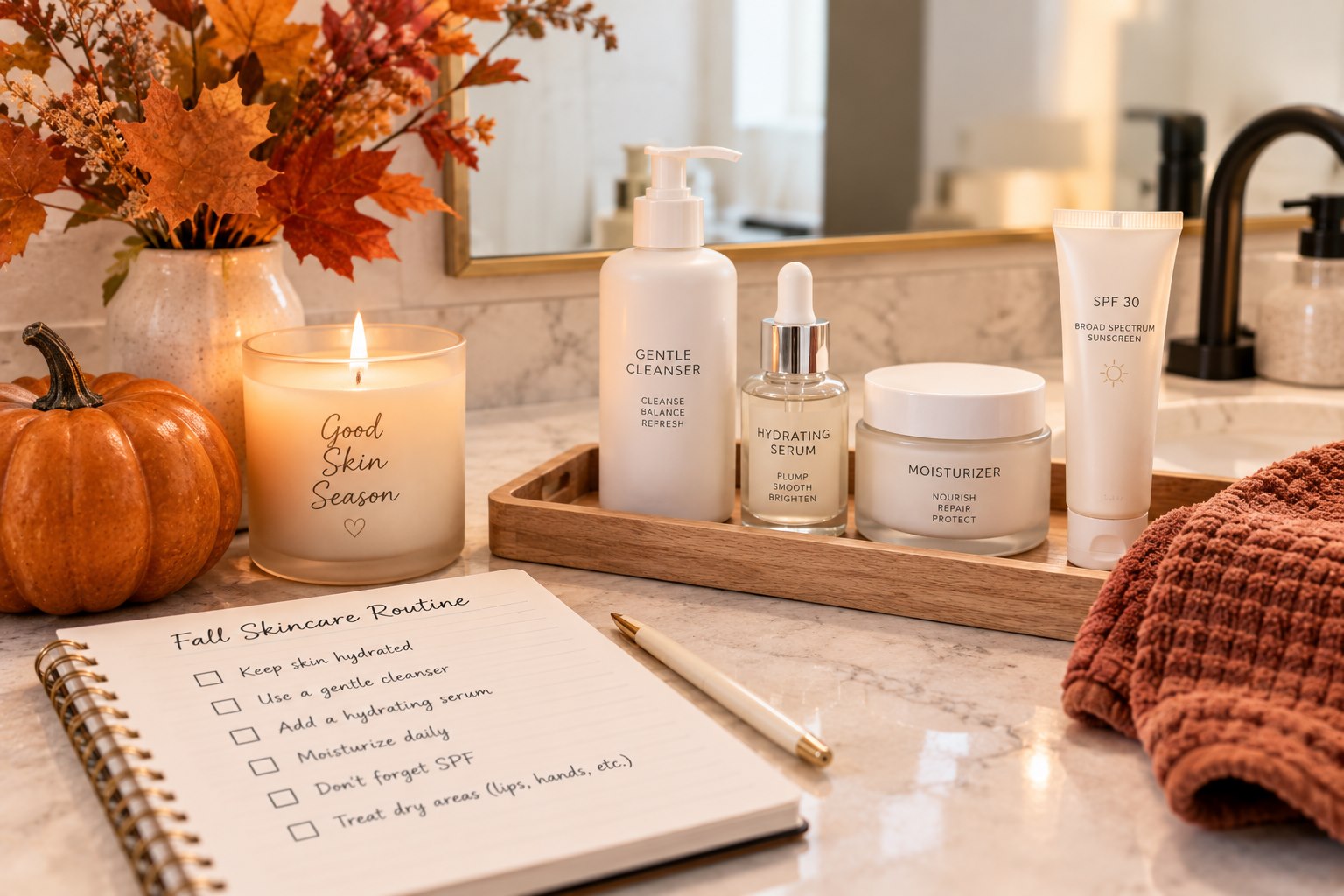
Your skin may feel different as the season changes. A cleanser that once felt comfortable may leave your face tight, or makeup may settle around flaky areas. Before adding several new products, review the basics of your fall skincare routine.
October is a useful time to consider comfort, consistency, and any plans for professional skincare before the holiday season. The goal is not to follow every seasonal trend. It is to understand what your skin is experiencing and choose a sensible next step.
For readers in Richmond, The Skin Suite offers professional skincare services and consultations. This guide helps you prepare for that conversation while keeping everyday care and medical concerns in their appropriate places.
Notice What Changed Before Changing Everything
Begin with the symptoms you actually observe. Is your skin tight after washing? Does a particular product sting? Are you seeing a new rash, or simply noticing dry-feeling areas?
Write down when the change began and whether you introduced anything new. Include cleansers, makeup, laundry products, and treatments that contact your skin.
These details help you avoid buying products based only on a broad label such as “fall skin.” Two people can experience dryness for different reasons.
Persistent or worsening symptoms deserve evaluation by a qualified healthcare professional. A seasonal explanation should not be assumed simply because the change appeared in October.
Keep the Core Routine Easy to Follow
A routine is easier to review when you know exactly what you use and when. List your morning and evening steps in order.
Mark prescription products separately. Do not stop or change a prescribed treatment without asking the clinician who manages it.
Then consider which steps have a clear purpose. If you are layering several products with similar claims, bring that list to a consultation rather than adding another one.
A streamlined routine can make it easier to notice what feels comfortable and what causes difficulty. Simplicity is a planning tool, not a guarantee that every skin concern will resolve.
Keep a product list instead of relying on memory
Photograph labels or note product names and strengths where available. “A serum in a blue bottle” gives a professional less useful information than the actual product.
Include how often you apply it and whether you use it on the whole face or selected areas. This can matter when discussing irritation or treatment preparation.
Review Gentle Cleansing and Moisturizing
The American Academy of Dermatology’s dry-skin guidance recommends gentle, fragrance-free care, short warm baths or showers, and moisturizing while the skin is still damp. It also advises seeking dermatology care when dryness persists despite appropriate self-care.
Use these principles as a starting point for reviewing your habits. Avoid treating discomfort as proof that a stronger product is working.
Discuss your skin type and tolerability before choosing a moisturizer. Price, packaging, and a popular ingredient do not tell the whole story.
If a product burns or causes a concerning reaction, stop using that nonprescription product and seek appropriate advice. Take the packaging or ingredient list to your visit so the concern can be discussed accurately.
Do Not Automatically Exfoliate Flaky Skin
Flaking can tempt you to scrub more often, especially when makeup does not sit smoothly. That is a good moment to pause and consider whether the skin is already irritated.
The AAD’s moisturizer advice cautions that exfoliating dry, peeling skin can worsen the problem. The appropriate approach depends on the condition and products involved.
Avoid combining a new scrub, acid product, and treatment appointment simply because you want a quick change before an event.
Instead, explain the flaking and your current routine to a qualified professional. Ask whether your skin needs a simpler care plan or medical evaluation before any cosmetic procedure is considered.
Keep Sun Protection in Your Fall Skincare Routine
Cooler weather does not remove the need to think about sun exposure. Outdoor activities, travel, and ordinary time outside still belong in the conversation.
AAD guidance recommends broad-spectrum sunscreen with SPF 30 or higher, alongside shade and protective clothing. Follow the product directions and any individualized instructions from your clinician.
Consider the parts of your day when protection is easiest to forget, such as a lunch outdoors or an afternoon event. Plan around your actual schedule.
If you are considering a professional treatment, ask specifically about sun exposure before and afterward. Treatment instructions may affect the timing of outdoor plans and should come from the provider evaluating you.
Plan Professional Skincare Around Your Goals
Before booking a facial or another cosmetic service, define the concern you want to discuss. Dryness, texture, discoloration, and an event deadline are different pieces of information.
The Skin Suite lists skincare services in Richmond, including facials and chemical peels. Availability of a service does not mean it is suitable for every person or every skin condition.
Ask what the consultation includes, how suitability is assessed, and what preparation and aftercare are required.
Be candid about sensitivity, recent tanning, previous reactions, medications, and medical history. These details belong in the assessment and may influence whether a treatment should proceed.
An October appointment should not create a deadline promise
If you have a November wedding, family photographs, or a holiday gathering, tell the provider the date. Ask about recovery, possible irritation, and realistic scheduling.
Do not assume a treatment guarantees a particular appearance by that date. Sometimes the most useful recommendation is to avoid introducing something new close to an important occasion.

Separate Cosmetic Questions From Medical Symptoms
A skincare consultation can help organize routine and aesthetic questions, but some concerns call for medical assessment.
Examples include persistent painful irritation, bleeding cracks, a spreading rash, or a spot that is changing. Seek a qualified healthcare professional rather than trying to cover or exfoliate the area.
Do not use a blog or a product quiz to identify the cause. Different conditions can look similar to someone without the relevant training.
If you already see a dermatologist, share the current care plan with any cosmetic provider. Coordination helps the discussion reflect your existing treatment rather than an isolated service request.
Prepare a Useful Consultation Brief
Bring your product list, relevant medical information, and a short description of what bothers you most. Include when the concern began and what you have already tried.
Photographs taken in consistent lighting can help describe changes. Avoid filters, since they may alter color and texture.
List upcoming events and outdoor travel. Then identify your main questions: whether your routine is appropriate, which steps may need review, and whether professional skincare is suitable.
Ask about costs, follow-up, aftercare, and what to do if a reaction occurs. Understanding the process helps you make a decision without relying on before-and-after images alone.
How to Introduce a Routine Change Thoughtfully
When a professional recommends a nonprescription change, ask how to introduce it and what response to watch for. Avoid making several unrelated changes at the same time.
Record the start date and keep notes brief. The purpose is to identify practical issues, not to inspect your skin anxiously throughout the day.
If a plan is difficult to follow, explain why. A product may feel uncomfortable, or the number of steps may not fit your mornings. Those are useful details for adjusting the approach.
Follow individualized directions for any procedure or prescribed treatment. A general fall skincare routine should support professional guidance rather than replacing it.
A Simple October Review You Can Use
Set aside time to inventory your products and note your top concern. Review cleansing, moisturizing, and sun protection before shopping for additions.
If your skin is persistently uncomfortable, arrange the appropriate assessment. If your question is cosmetic, prepare a focused consultation brief and ask about suitability.
Keep your event calendar visible when considering procedures. Allow the provider to recommend timing based on your circumstances rather than a seasonal promotion.
The best plan is one you understand, can follow, and can review if your skin changes again.
Keep Event Preparation Separate From Everyday Care
A photograph date can make every small concern feel urgent. Before changing the routine, identify whether the issue is new, persistent, or mainly visible under makeup.
Bring that distinction to the consultation. It helps the provider understand whether you need a routine review, a discussion of cosmetic options, or a different professional assessment.
Avoid allowing the event date to become the only reason for a decision. A useful plan should account for skin comfort and suitability as well as your calendar.
Frequently Asked Questions
Why does my skin feel dry in fall?
Seasonal conditions and changes in habits may contribute, but the timing alone does not establish the cause. Review products, washing habits, and recent changes. Persistent, painful, or worsening dryness should be evaluated by a qualified healthcare professional, especially when there is a rash or significant irritation.
Should I exfoliate flaky skin before applying makeup?
Do not assume that more exfoliation is the right answer. Dry, peeling skin may become more irritated with scrubs or strong products. Review gentle care and seek professional advice if the problem persists. Ask about your actual skin condition rather than treating every flaky area as a cosmetic texture issue.
Do I still need sunscreen in October?
Sun protection remains relevant during fall outdoor activities. AAD guidance recommends broad-spectrum SPF 30 or higher, along with shade and protective clothing. Follow product directions and any specific treatment instructions. Cooler temperatures should not be the reason to remove sun protection from your routine.
How far ahead should I plan skincare before holiday events?
Tell your provider the event date before booking. Appropriate timing depends on the treatment, your skin, preparation, and possible recovery or irritation. There is no universal deadline that guarantees a result. Avoid introducing an unfamiliar procedure immediately before an important occasion without discussing the risks and alternatives.
Where can I discuss professional skincare in Richmond?
The Skin Suite offers skincare services at 1012 Center Drive, Suite A, in Richmond. Review its skincare page and arrange a consultation to discuss goals, current products, and suitability. Persistent medical symptoms should also be addressed with the appropriate healthcare professional.
Get Guidance for Your Next Skincare Step
To discuss your fall skincare routine and professional skincare options, visit The Skin Suite or call 859-484-6736. Bring your product list and October concerns so the conversation starts with your skin and your goals.